DiFlowRin Research Verified References

Free WordPress plugin for authors

Check every source before you publish

AI writing tools invent sources that look real, and careful authors still get years, journals and DOIs wrong. Verified References checks every source of a post right in the block editor, fixes wrong details in one click and shows your references as a formatted list.

Free  ·  No account  ·  No limits  ·  No JavaScript for visitors

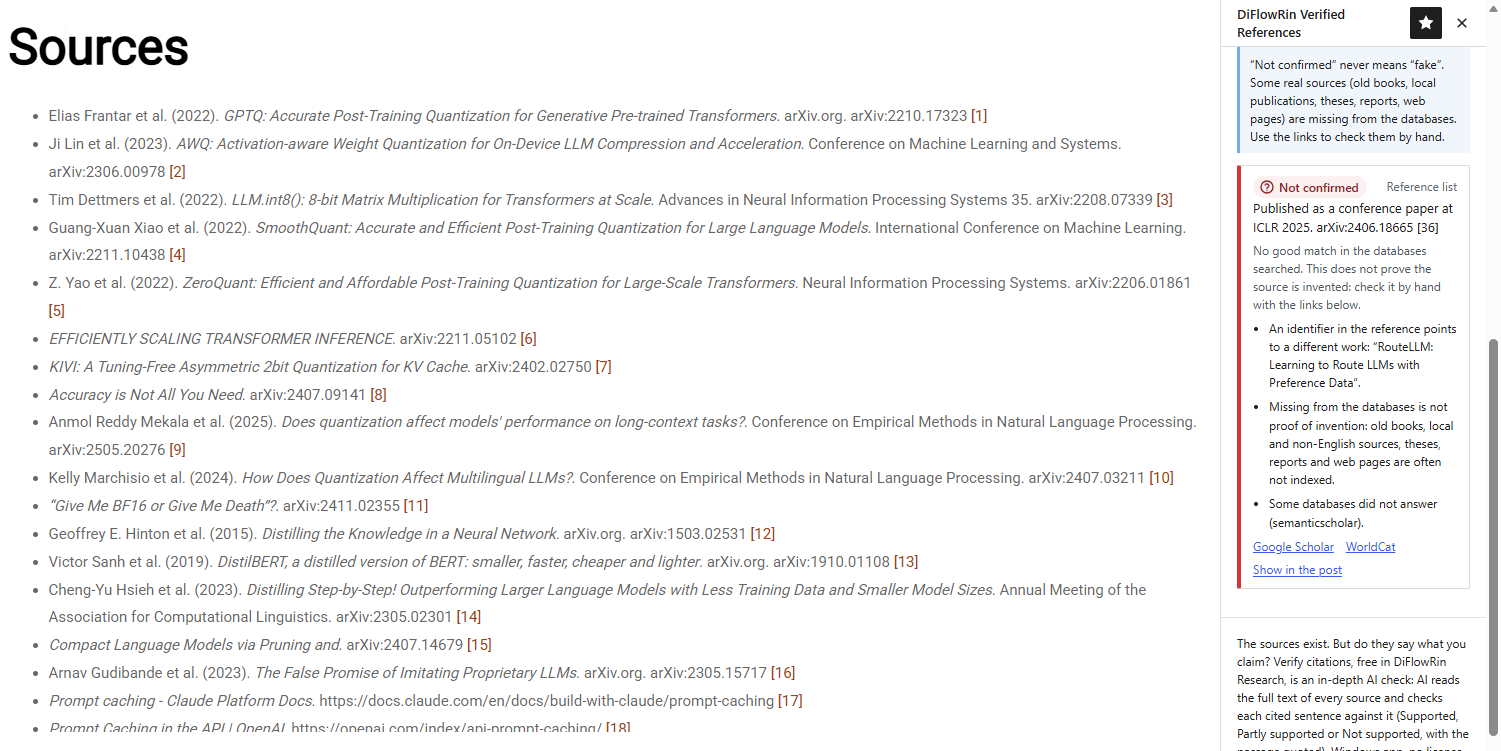
The DiFlowRin Verified References panel in the block editor after a check: 35 sources found in a post, with a verdict for each one.
Screenshot A real post on our blog: 35 sources checked in the editor

Your readers trust your sources. Make sure they exist.

One invented study or a wrong year is enough to cost a post its credibility, with readers and with search engines. Checking each source by hand means searching several databases per reference. This plugin does that search for you, inside the editor, before you hit Publish.

Health, nutrition and finance sites Science and research blogs Researchers, PhD students and teachers Consultants and analysts Content teams that draft with AI

How it works

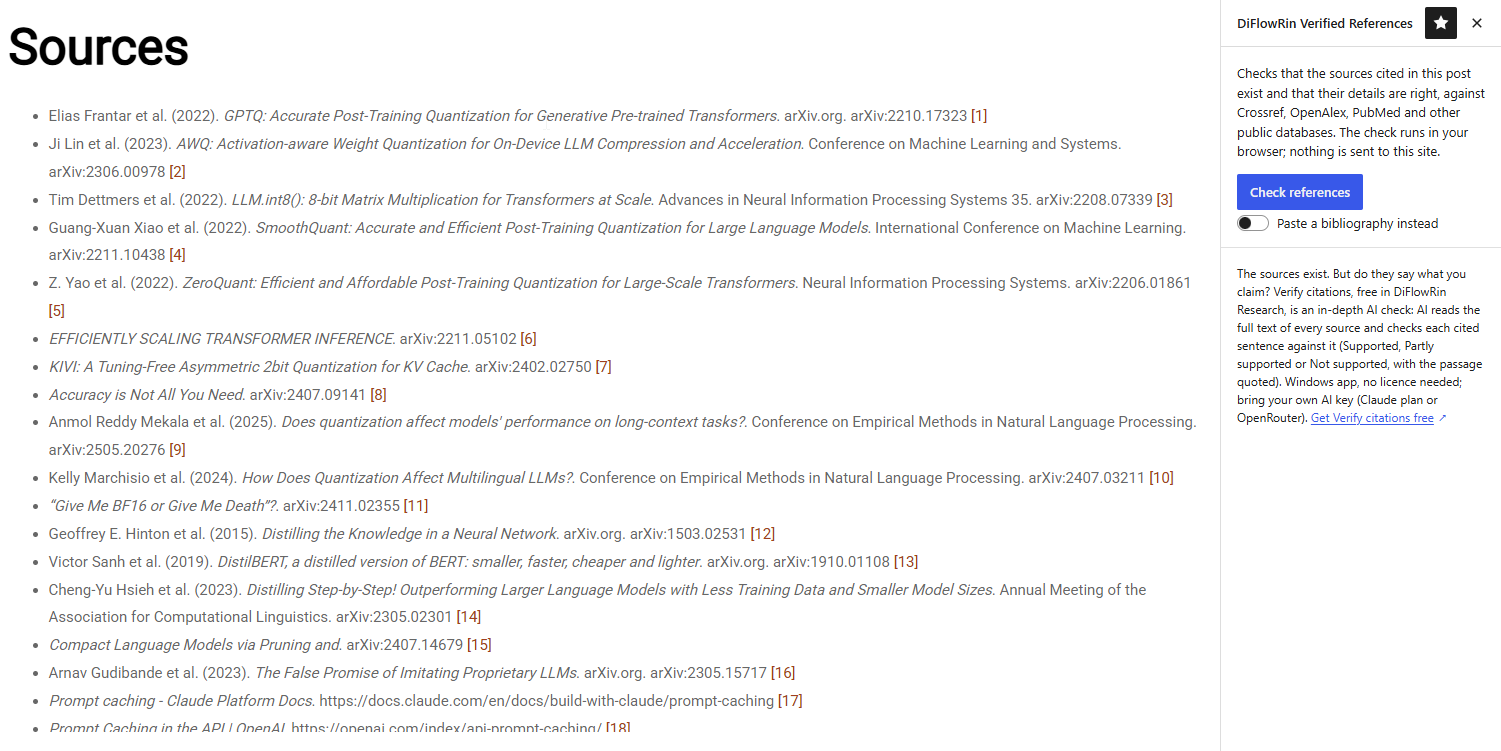
  1. Open the panel

    In the block editor, open DiFlowRin Verified References from the toolbar (the list icon with a check mark) and click Check references.

  2. It finds the sources on its own

    References blocks, a list or paragraphs under a "References", "Bibliography", "Sources" or "Works cited" heading, footnotes, and DOI, arXiv and PubMed links anywhere in the text. You can also paste a bibliography: up to 100 references, any style, BibTeX or RIS.

  3. Your browser looks them up

    Each reference is matched by DOI, ISBN, arXiv or PubMed ID, then by title, authors and year, in Crossref, OpenAlex, DataCite, PubMed, Open Library and Semantic Scholar.

  4. Fix what is wrong

    Correct in the post replaces a miscited reference with the record, in your citation style. Download the results as a text report or a CSV table. An optional pre-publish reminder lists sources that were not confirmed; publishing is never blocked.

Four verdicts, each with its evidence

Confirmed

Found in a database, and the details match.

Wrong details

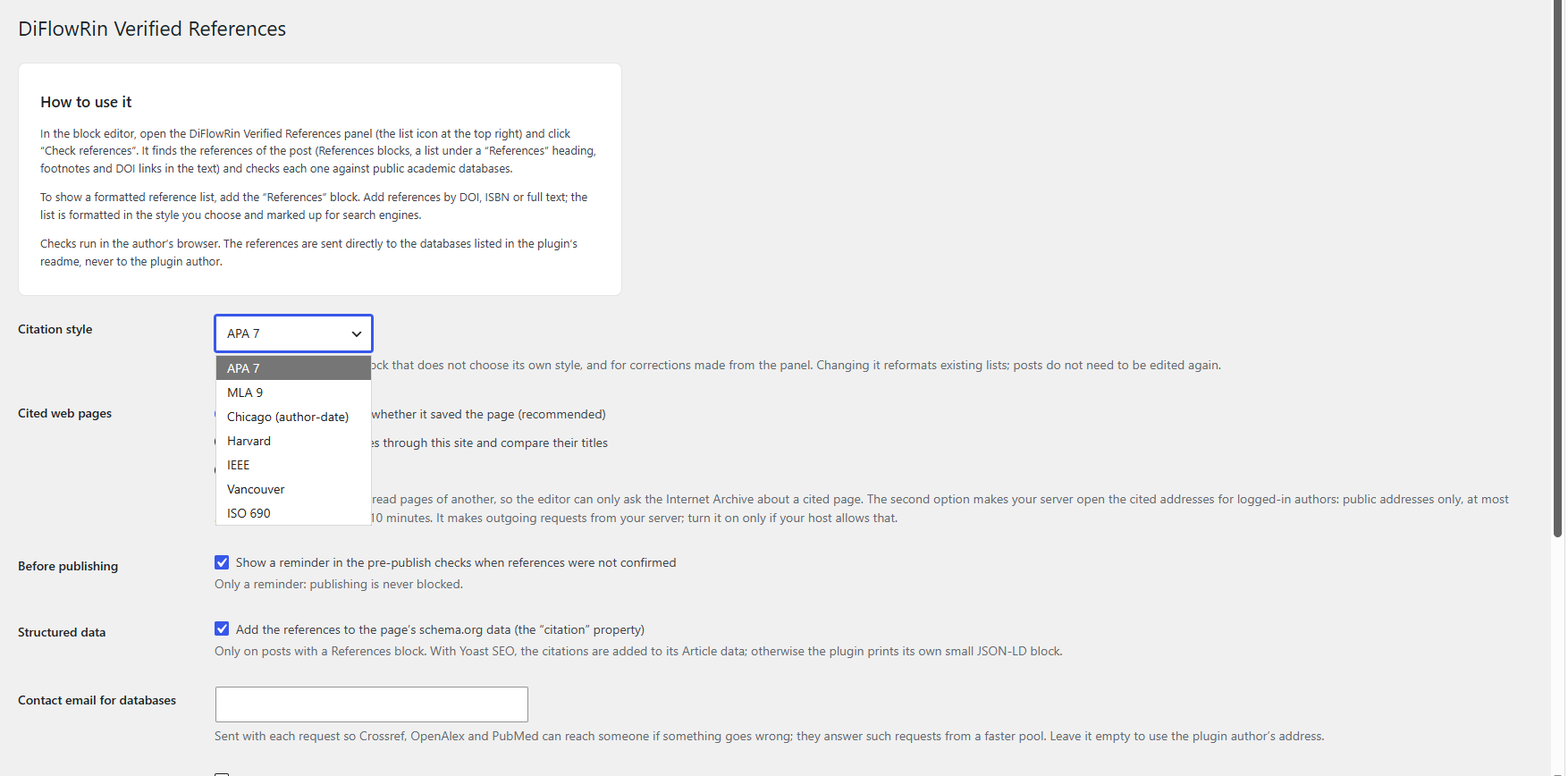
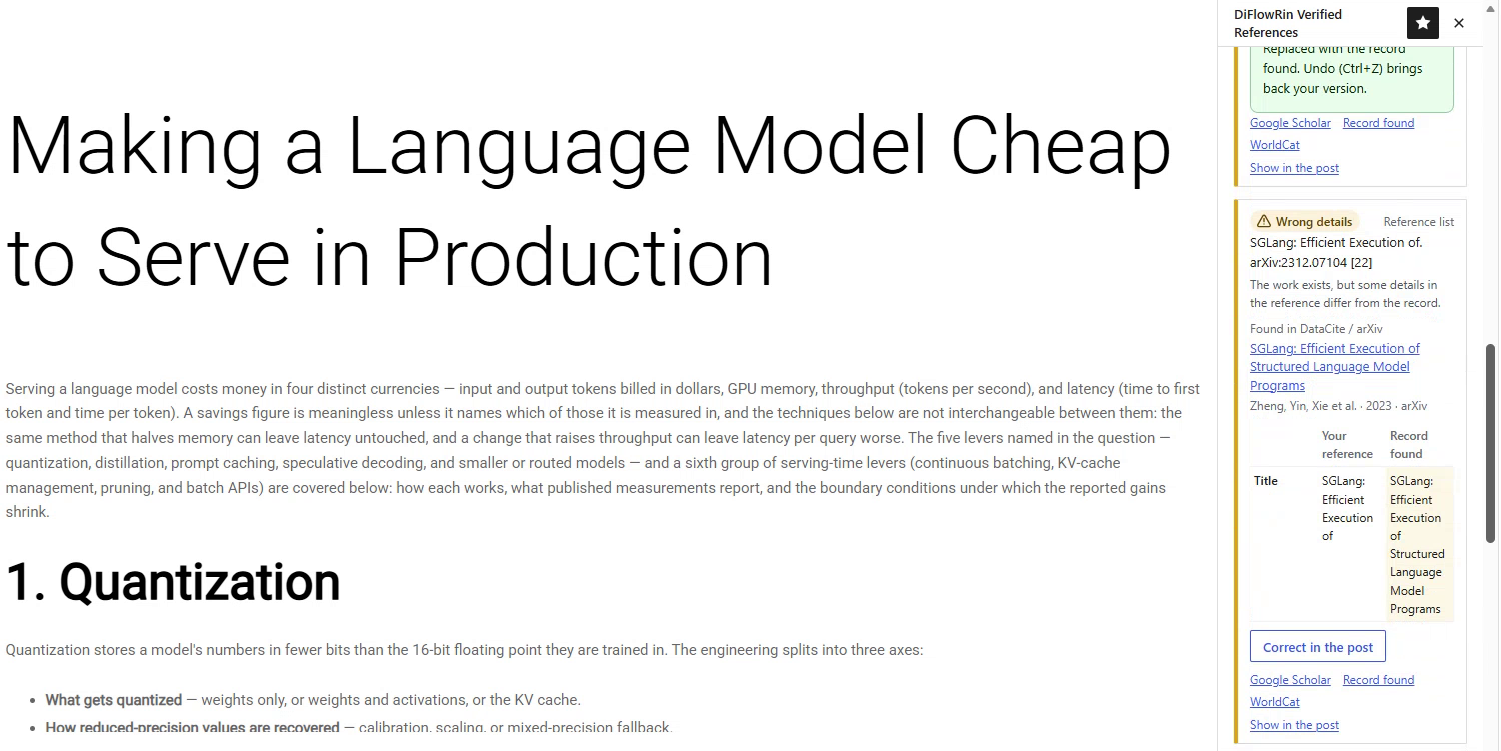
The work exists, but the year, authors, title, journal or DOI differ from the record. Both values are shown side by side, and Correct in the post rewrites the reference from the record. No correction is offered when the authors differ: that is usually a different work with a similar title.

Not confirmed

No good match in the databases. Links to Google Scholar and WorldCat help you check by hand.

Web source

A report, policy, news article or blog post, which academic databases do not list. The plugin asks the Internet Archive whether the page existed.

"Not confirmed" never means "fake". Older books, local publications, theses and reports are often missing from the databases, and the panel says so next to every such result.

A reference marked Wrong details: the title cited in the post next to the record found, with a Correct in the post button.
Wrong details The cited title next to the record, and Correct in the post

Show a reference list readers can trust

Add the References block and add sources by DOI, ISBN, arXiv or PubMed ID, as full text, or paste a whole bibliography. Found references are formatted for you.

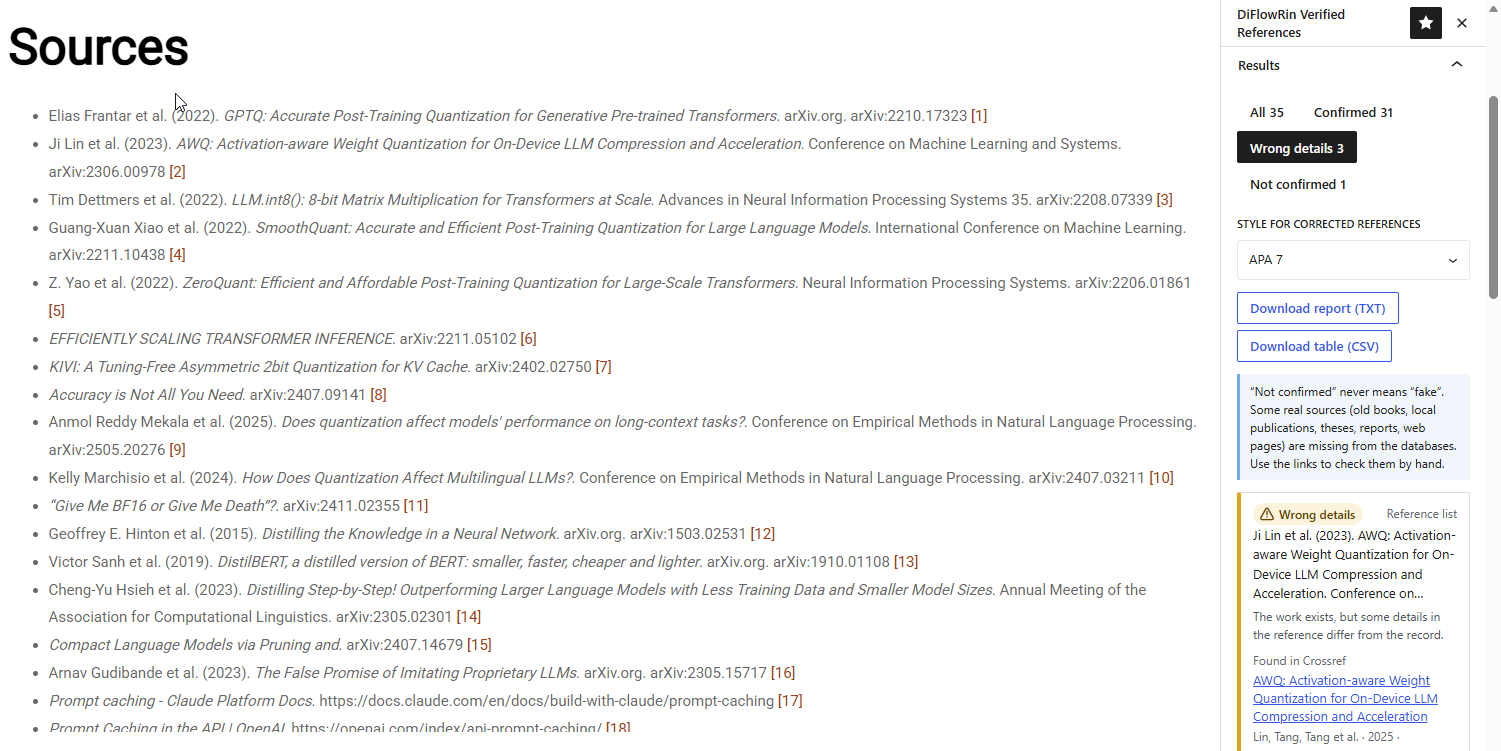
APA 7MLA 9ChicagoHarvardIEEEVancouverISO 690
  • Set the style for the whole site or for each block. The list is rendered on the server, so changing the style later reformats every post without editing it again.
  • DOIs and source addresses become links.
  • Each reference gets a numbered anchor (#ref-1, #ref-2…), so citations in your text can link to it.
  • The references join the page's schema.org data as the article's citation property, each with the type that fits. With Yoast SEO they join its Article data.
  • Check results are saved with each reference and shown only to editors. Visitors never see them.

References

  1. Ioannidis, J. P. A. (2005). Why most published research findings are false. PLoS Medicine, 2(8), e124. https://doi.org/10.1371/journal.pmed.0020124
  2. LeCun, Y., Bengio, Y., & Hinton, G. (2015). Deep learning. Nature, 521(7553), 436–444. https://doi.org/10.1038/nature14539
  3. Vaswani, A., Shazeer, N., Parmar, N., Uszkoreit, J., Jones, L., Gomez, A. N., Kaiser, Ł., & Polosukhin, I. (2017). Attention is all you need. arXiv. https://doi.org/10.48550/arXiv.1706.03762
Example Three sources added by DOI, shown in APA 7 with your theme's fonts

Nothing reaches us

Checks run in the author's own browser, which talks directly to the public databases, and only when you click a check button or add a reference.

  • Nothing goes to the plugin author. No account, no limit, nothing to pay.
  • No data about visitors, no cookies, no usage statistics.
  • Results are saved in the post itself, visible only to people who can edit it. No new database tables.
  • Database answers are cached in the author's browser for up to 30 days, so checking a post again is fast.
  • Suggested text for your privacy policy is added to Settings → Privacy.

Light by design

  • No JavaScript for visitors. One small stylesheet, loaded only where a References block is shown.
  • The editor script loads only in the block editor, and checks start only when you ask.
  • The list takes its fonts and colors from your theme, with the usual typography, color and spacing settings.
  • Developers can change the markup with the vrefs_render_list filter and the structured data with vrefs_schema.
  • Translatable, and follows your site's language.

Make it yours

Under Settings → Verified References you can set:

  • The default citation style, one of seven.
  • How cited web pages are checked: through the Internet Archive (default), or opened by your server for logged-in authors, with strict limits.
  • The pre-publish reminder about sources that were not confirmed.
  • Structured data for reference lists, on or off.
  • A contact email sent to the databases, as they request.
The Verified References settings page in WordPress, with the citation style list open.

How accurate is it?

It uses the same checking engine as the Fake Citation Detector browser extension and the Bibliography Checker plugin.

0

real references marked "not confirmed"

120of 120

invented references caught

55of 55

references with a changed year, journal or author flagged

Tested in October 2026 on about 400 references in seven citation styles. Real bibliographies are messier, especially for older and local sources, so treat the result as a first pass, not a verdict.

Install in a minute

  1. Install

    In WordPress, go to Plugins → Add New, search for DiFlowRin Verified References, then install and activate it.

  2. Check a post

    Edit a post in the block editor, open DiFlowRin Verified References from the toolbar at the top right, or from the Options menu (⋮) → Plugins, and click Check references.

  3. Show the list

    Add the References block where the list should appear, and review Settings → Verified References if you like.

WordPress 6.4 or higherPHP 7.4 or higherBlock editorVersion 1.0.0Open source (GPL)

Downloads from WordPress.org

22

Daily downloads read live from the WordPress.org plugin API, over the last 30 days it returns. The plugin has been in the directory since 3 November 2026.

22
Busiest day, 3 November 2026
22
Average day over the period
1.0.0
Current release, 3 November 2026
1
Days of figures returned
3 Nov 2 Dec

Going further

Does the source actually support the claim?

This plugin checks that each source exists and is cited correctly. It does not read the sources. DiFlowRin Research does: its Verify citations feature is free, uses your own AI key, reads the full text of every source and checks each cited sentence against it. Want visitors to check their own bibliographies? That is the Bibliography Checker plugin.

Questions

Does "Not confirmed" mean the reference is fake?

No. It means none of the databases searched had a good match. Many real sources are missing from them: old books, local and non-English publications, theses, reports, standards and web pages. Invented references usually end up here, but so do some real ones, so check those by hand with the links shown next to each result.

How accurate is it?

It uses the same checking engine as the Fake Citation Detector browser extension. On about 400 test references in October 2026, no real reference was marked Not confirmed, all 120 invented references were caught, and all 55 references with a changed detail were flagged as having wrong details. Real bibliographies are messier, so treat the result as a first pass, not a verdict.

Is anything sent to my server or to you?

No. The author's browser talks directly to the public databases. Nothing goes to the plugin author. Your server only stores the post, as usual, and, if you turn on the optional page proxy, opens the addresses of cited web pages for your authors.

Will it slow down my site?

No. Visitors get one small stylesheet on pages with a References block, and no JavaScript. In the editor, nothing is checked until you click a button.

Does it work with the classic editor?

Not yet: the panel and the References block need the block editor. Posts written in a single Classic block can be converted with Convert to blocks.

Can I link a citation in my text to the reference list?

Yes. Each reference has an anchor such as #ref-3, shown under it in the editor with a Copy link action. Select your citation text, add a link and paste the anchor. If a page has two lists, give the second one another anchor prefix in the block settings.

Why only 100 references at a time?

The databases are free public services. Checking at most 100 references at a time, a few at once, with short pauses, keeps the tool within their fair-use rules.

Can I change how the list looks?

The list uses your theme's fonts and colors, and the block supports the usual typography, color and spacing settings. Developers can change the markup with the vrefs_render_list filter and the structured data with vrefs_schema.

Publish with sources you have checked

Free · Open source · WordPress 6.4+ · PHP 7.4+