

diflowrin

I build web and mobile applications with AI in the loop, from Arad, Romania. I write here about the tools and methods behind AI-assisted development — what ships, what does not, and the trade-offs in between.

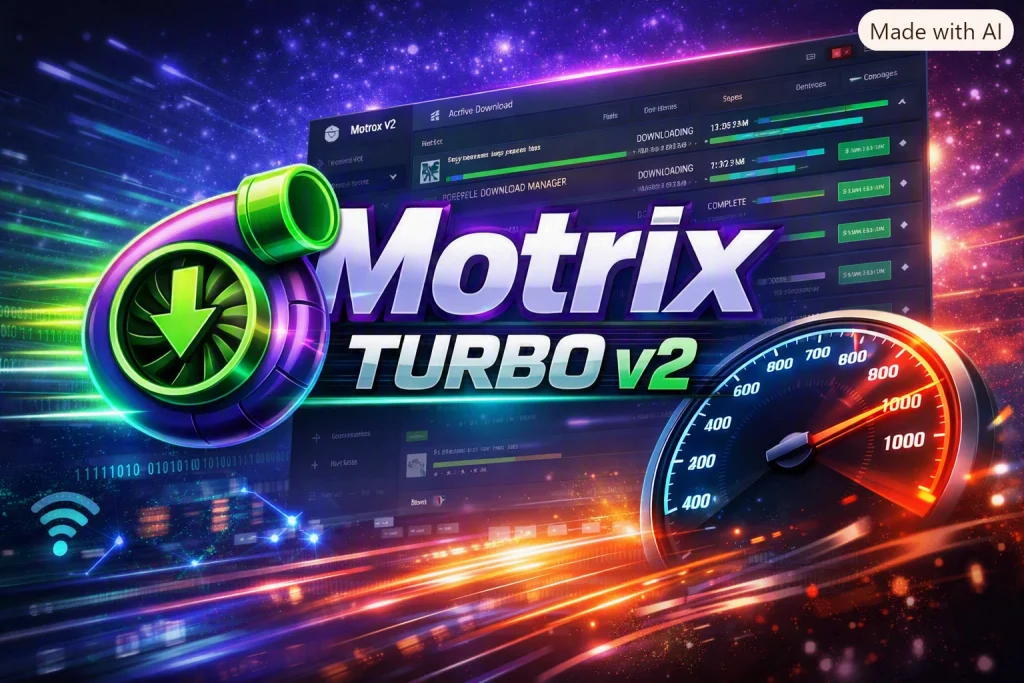
Motrix Turbo v2: what the rewrite actually changes, and what you can install today

Motrix, long known as a clean GUI wrapper around aria2, is being rebuilt from the ground up. The new line is called Motrix Turbo v2, and it splits the download core away from the interface, then exposes that core through MDXP, an open protocol built on JSON-RPC 2.0. The same core drives the desktop application

Motrix Turbo v2: what the rewrite actually changes, and what you can install today Read More »

Muse Glimmer 30B: Meta's Local Agentic Model

Muse Glimmer 30B: What Meta’s Local Agentic Model Actually Requires

Meta released Muse Glimmer on 10 August 2026: a dense, multimodal, Apache 2.0 model distilled from Muse Spark and aimed at agents that run on your own hardware. The pitch is genuinely interesting, and — unlike most “runs locally” claims — the deployment story mostly holds up when you check the numbers. Where it needs

Muse Glimmer 30B: What Meta’s Local Agentic Model Actually Requires Read More »

DeepTutor: Open-Source Agent-Native AI Tutor

DeepTutor: Open-Source Agent-Native AI Tutor

DeepTutor is an open-source, agent-native personalized tutoring and learning workspace built by HKUDS, and it has collected a lot of attention fast: the GitHub API reports 34,646 stars and 4,416 forks on HKUDS/DeepTutor, a Python project under Apache-2.0 created on 2025-12-28. Stars measure interest, not quality, so treat that number as a signal that people

DeepTutor: Open-Source Agent-Native AI Tutor Read More »

Prime Agent: Self-Improving Terminal Coding Assistant

Prime Agent: Prime Intellect’s Self-Improving Terminal Coding Harness

Prime Intellect open-sourced Prime Agent on 6 August 2026 under an MIT licence. It is a terminal coding and research agent built around two ideas that most harnesses don’t implement: treating context as a program variable rather than a chat transcript, and letting the agent revise parts of its own scaffolding while a task is

Prime Agent: Prime Intellect’s Self-Improving Terminal Coding Harness Read More »

Free OpenRouter Models for Blog Writing: 4-Model Benchmark

Free OpenRouter Models for Blog Writing: 4-Model Benchmark

📋 What You’ll Need to Follow This Guide An OpenRouter account (free to create) Access to at least one free-tier LLM model on OpenRouter A desktop writing workflow or content generation app that supports OpenRouter API integration Basic familiarity with content scoring and SEO metrics Optional: Pexels API access for automated image sourcing Understanding Free-Tier

Free OpenRouter Models for Blog Writing: 4-Model Benchmark Read More »

SEO Content Architect: AI-Powered WordPress Publishing at Scale

How AI-Driven Content Automation Is Reshaping WordPress Publishing Workflows SEO Content Architect is a Windows desktop application that consolidates AI writing tools, real-time SEO analysis, and automated distribution into a single integrated platform. By combining multi-model AI (Google Gemini, OpenAI GPT, Claude, OpenRouter), competitive keyword analysis, and direct WordPress publishing, this best ai writing tool

SEO Content Architect: AI-Powered WordPress Publishing at Scale Read More »

Build Open-Source Voice Agents with Speech-to-Speech Pipelines

Understanding Speech-to-Speech Technology Speech-to-speech technology enables machines to listen to spoken input, understand it, process it intelligently, and respond with natural spoken output. Unlike traditional voice assistants built on proprietary or monolithic models, a speech-to-speech pipeline breaks this complex task into discrete, composable stages. Each component can be selected, customized, and optimized independently, creating flexible

Build Open-Source Voice Agents with Speech-to-Speech Pipelines Read More »