

📋 What You’ll Need to Follow This Guide
An OpenRouter account (free to create)
Access to at least one free-tier LLM model on OpenRouter
A desktop writing workflow or content generation app that supports OpenRouter API integration
Basic familiarity with content scoring and SEO metrics
Optional: Pexels API access for automated image sourcing
Understanding Free-Tier LLM Benchmarking for Content Creation
Most creators lack real-world data about which free AI models on OpenRouter actually deliver usable blog articles without token costs. This benchmark tests four freely available models through a complete keyword-to-article workflow, measuring speed, text quality, and how each model responds to SEO improvement passes. That refinement step matters because it separates models that produce decent first drafts from those that can compete with ranking pages.
Understanding which free-tier models work reliably in production environments saves significant time and resources. This article walks through the methodology, results, and practical implications of testing these models in a real desktop writing setup where cost efficiency is non-negotiable. When you compare AI models on OpenRouter, you need concrete data—not just marketing claims—about which free model options actually perform in your workflow.
How the Workflow Was Structured
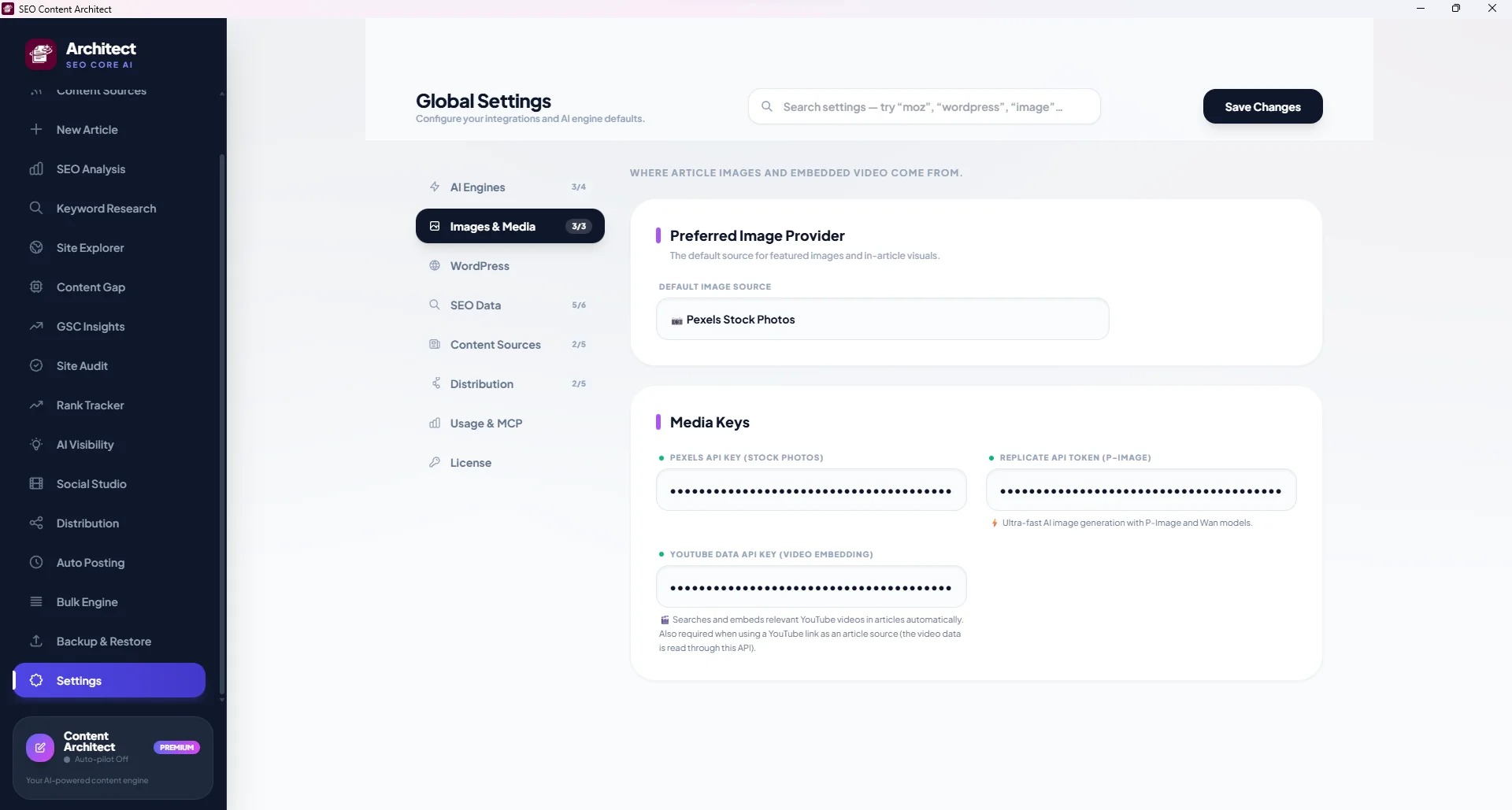
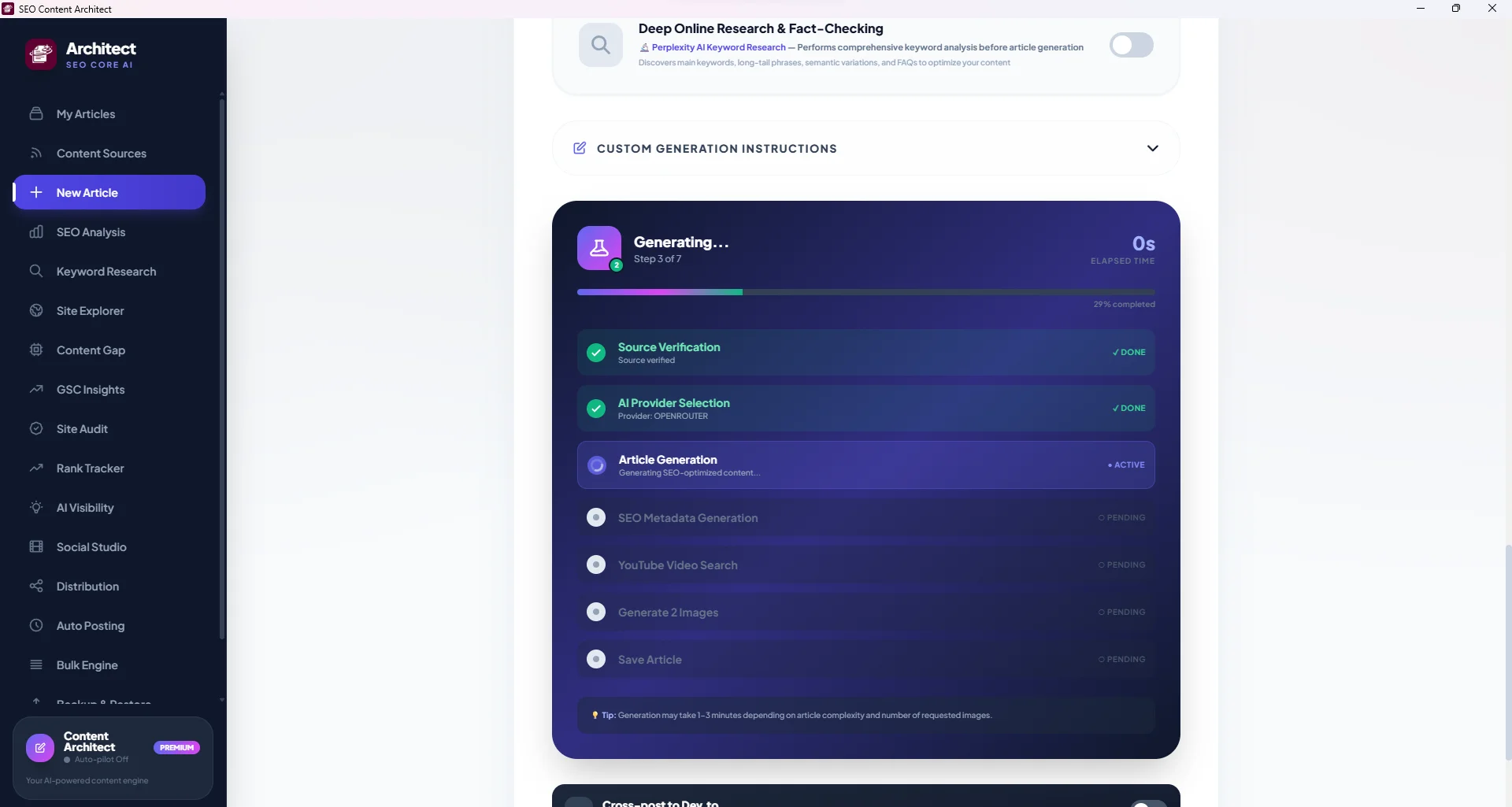
Images were sourced automatically from Pexels, ensuring the entire process remained at zero direct cost. The resulting articles were scored against a content score, a metric comparing the generated output against the semantic and structural characteristics of pages already ranking for that keyword. This approach provides actionable feedback: a higher score suggests the model produced content more likely to compete in search results. Each model’s capabilities were evaluated not just on initial output, but on how well it responded to optimization requests and handled context windows across multiple requests.
ℹ️ Note: Content scoring does not guarantee ranking; it measures how closely the generated article aligns with the structural and topical patterns of existing top-ranked content for the same keyword.
Why This Matters for Your Workflow
Most content creators operate under budget constraints. Testing free AI models in a real workflow, rather than in isolation, reveals which models actually fit into production pipelines. A model that generates great text but fails during the refinement pass is less useful than one that completes both stages reliably, even if the initial output is weaker. Understanding the capabilities of each free model helps you make informed decisions about which models router to prioritize in your content strategy.
Model-by-Model Results: What Each Free Model Delivered
Four models were tested under identical conditions. The results varied significantly, revealing that free-tier availability does not guarantee consistent performance or reliability. When you evaluate free AI models, you need to understand not just their capabilities, but their actual behavior under production conditions.
inclusionai/ling-3.0-flash:free: Fast but Refinement-Fragile
This model impressed with raw speed and text quality that exceeded expectations for a best free offering. The initial drafts were coherent, well-structured, and required minimal cleanup. However, the SEO improvement pass failed consistently every time it was executed on this model. The cause remains unclear, whether a model-specific limitation, timeout issue, rate limits on refinement requests, or incompatibility with the refinement prompt structure.
As a result, inclusionai/ling-3.0-flash:free is usable as a first-draft generator but should not be relied upon if your workflow requires a second optimization pass. For teams that can accept single-pass output or who manually refine articles afterward, this model remains a solid starting point. The vision and reasoning capabilities appeared adequate for basic content generation, though the model showed limitations when handling complex multi-step requests.
⚠️ Warning: This model’s consistent failure during SEO refinement suggests it may have limitations with certain prompt structures or instruction-following patterns. Test thoroughly before incorporating into automated workflows, and be aware of potential rate limits that may affect refinement requests.
nvidia/nemotron-3-ultra-550b-a55b:free: The Reliable Performer
Among the four models tested, this NVIDIA Nemotron free model emerged as the most dependable overall choice. It delivered fast generation, produced solid text quality, and completed the SEO improvement pass without errors or failures. The articles it generated required no special troubleshooting and integrated seamlessly into the refinement pipeline. The model’s reasoning capabilities and context handling proved robust across multiple requests, making it ideal for production workflows where reliability is paramount.
For teams evaluating which best free OpenRouter model to test first, this model represents the safest initial investment of time. Its combination of speed, reliability, and successful completion of multi-step workflows makes it the benchmark against which other free models should be compared. When you compare AI models on OpenRouter, this NVIDIA option consistently delivers the capabilities needed for professional content production.
💡 Tip: If you’re just starting with free-tier models and have limited time for testing, begin with nvidia/nemotron-3-ultra-550b-a55b:free. Its track record of completing both draft and refinement stages makes it the lowest-risk entry point for evaluating models on OpenRouter.
nvidia/nemotron-nano-9b-v2:free: Weak First Draft, Strong Response to Refinement
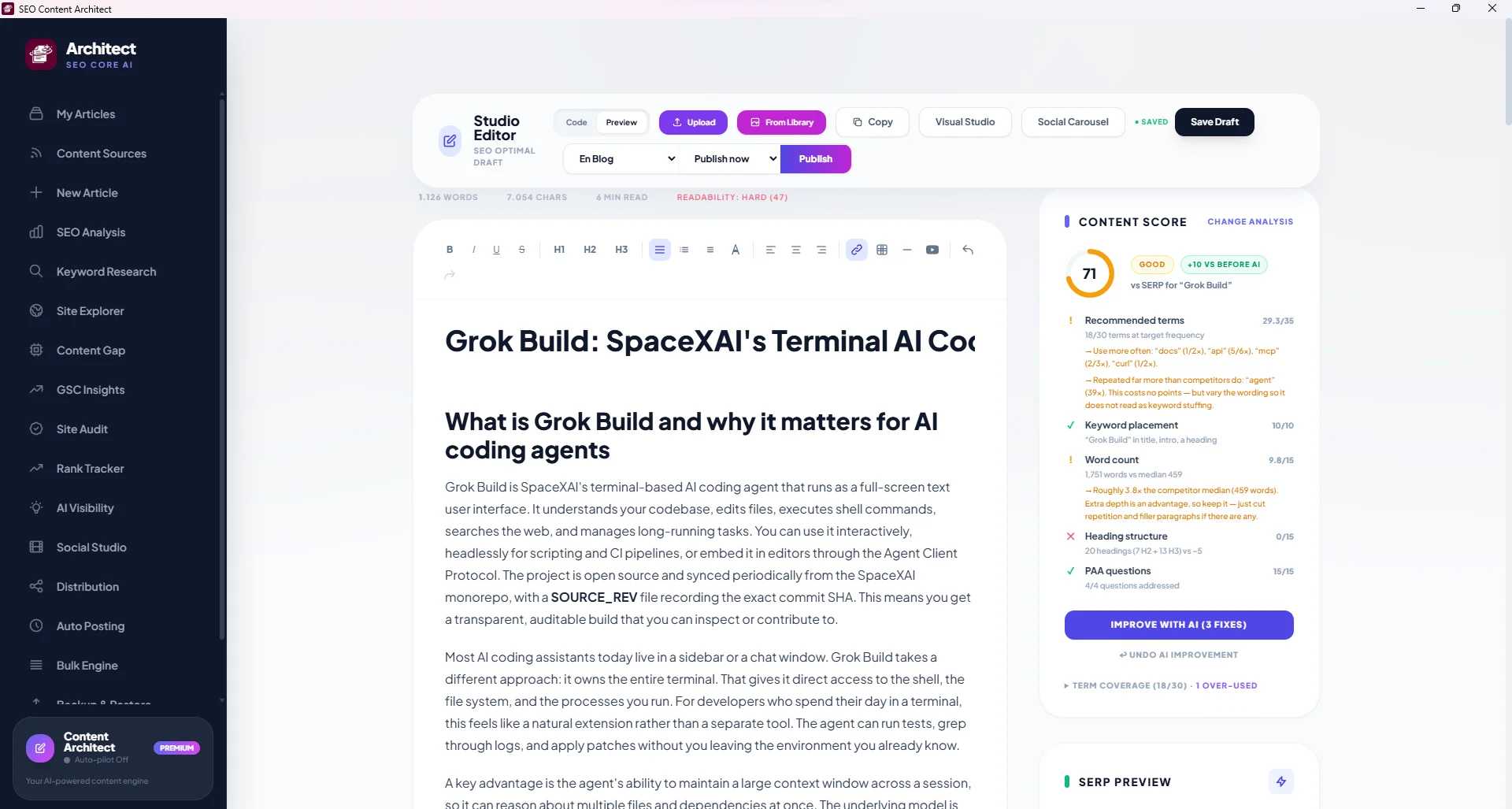
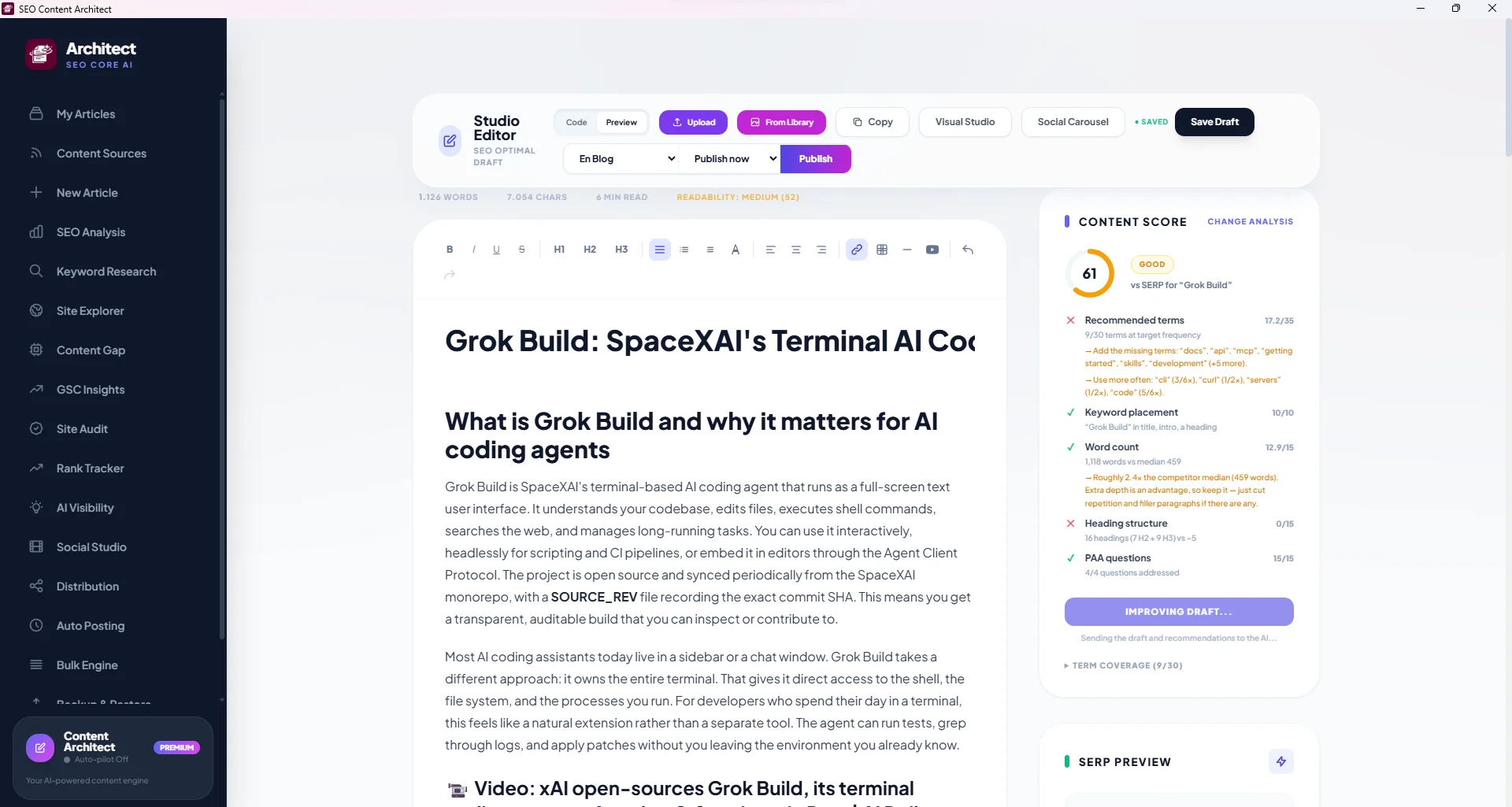
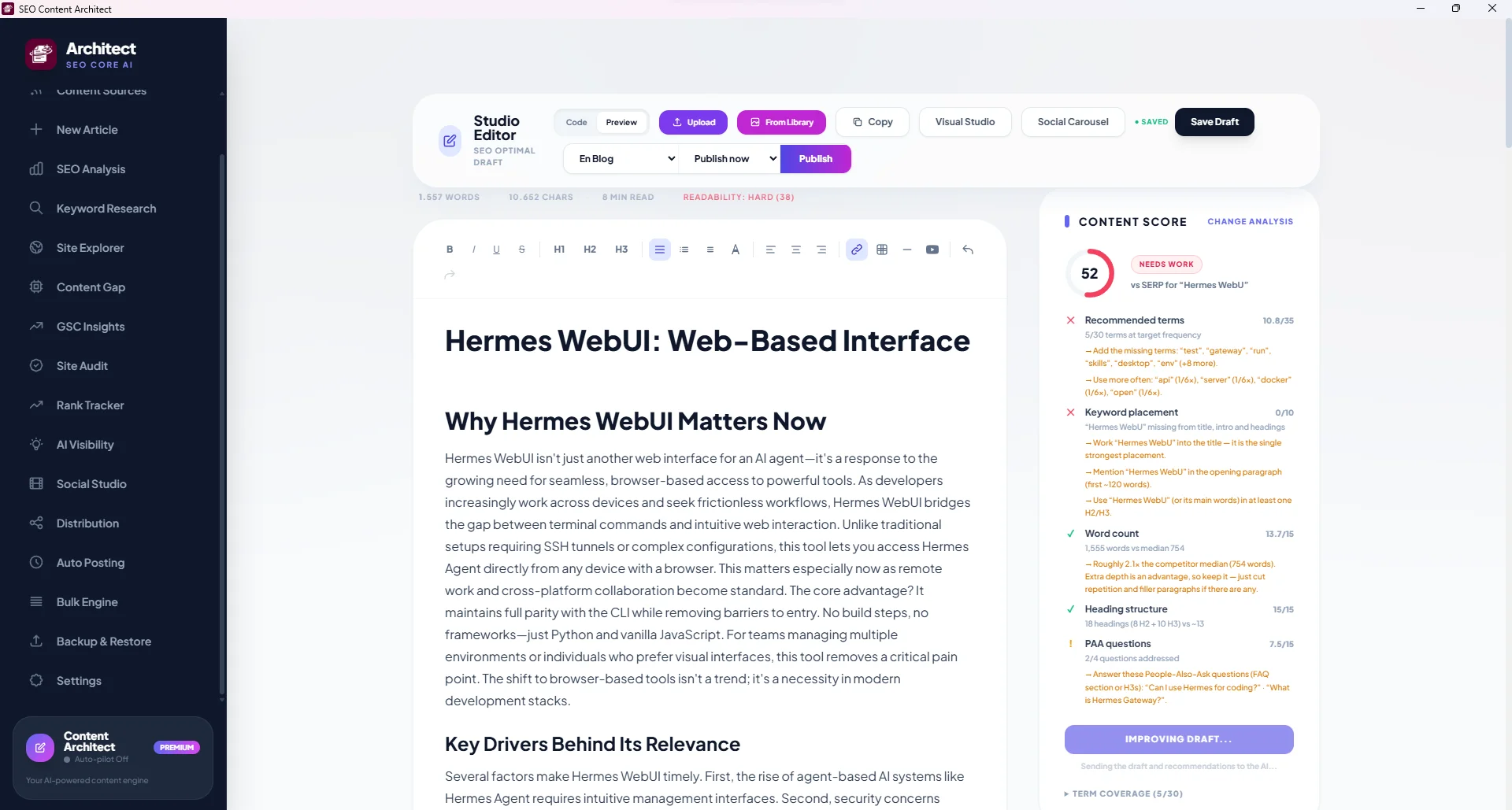
This model tells a different story than the previous two. When set to generate “short” articles, it produced a 1,557-word piece, significantly longer than expected. This may indicate the model interprets length instructions differently, or it may reflect how the model’s reasoning processes handle length constraints. The initial content score came back at 52, which is relatively weak and suggests the first draft underperformed compared to ranking competitors.
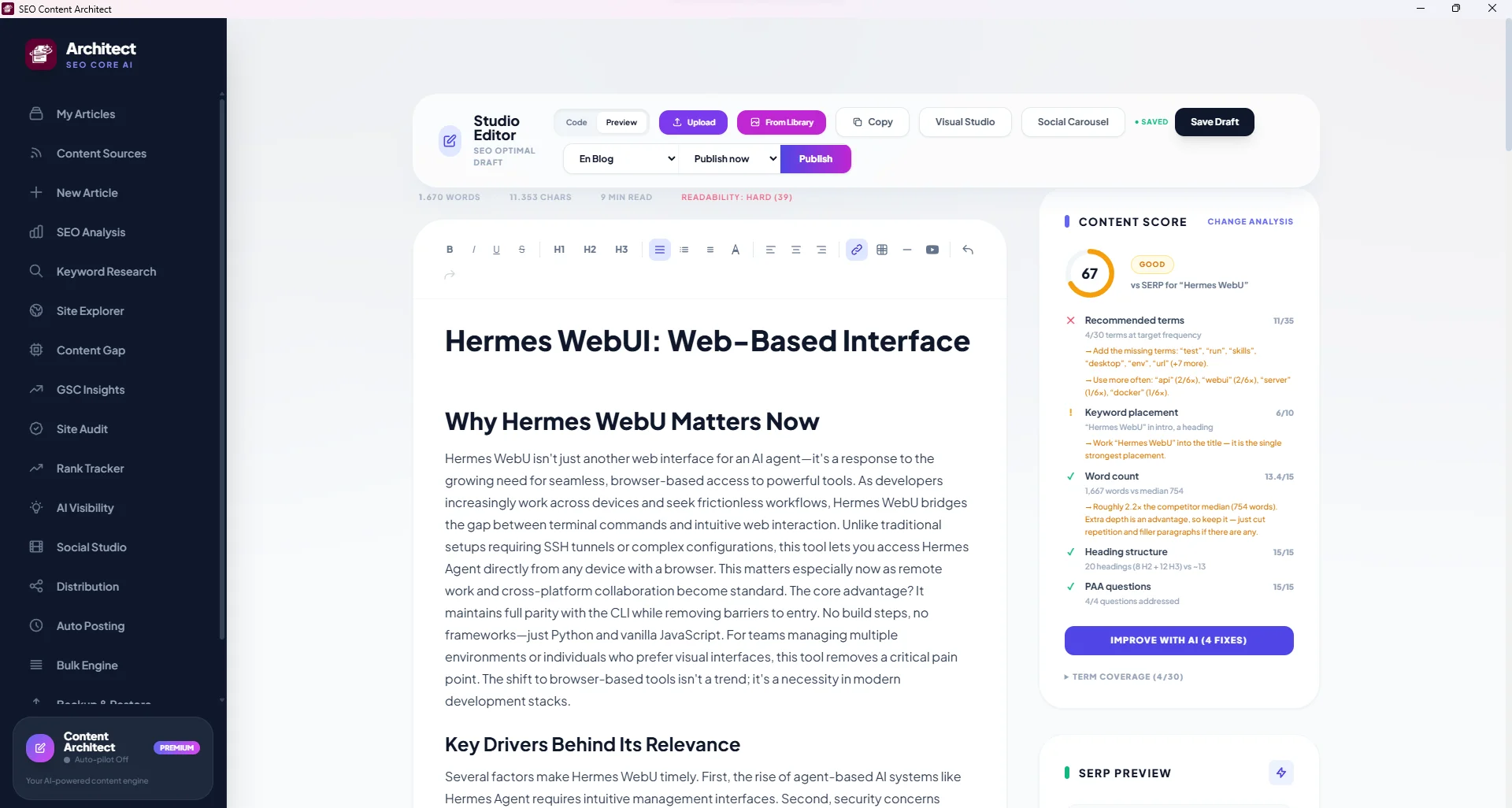
However, after running the SEO improvement pass, the score climbed to 67, a meaningful 15-point jump. This pattern reveals that the model excels at refinement despite struggling with initial output quality. Therefore, if your workflow accommodates a two-step process, this model becomes viable and potentially cost-effective, since it demonstrates responsiveness to optimization prompts. The model’s vision and multimodal capabilities were adequate, though its initial reasoning about content structure needed refinement.
The trade-off is clear: accept a weaker first draft in exchange for a model that dramatically improves when refined. For teams with time for iteration, this represents a usable free option despite its initial limitations. Understanding the context window and rate limits for this model is important when planning multi-request workflows.
nvidia/nemotron-3-super-120b-a12b:free: Complete Failure
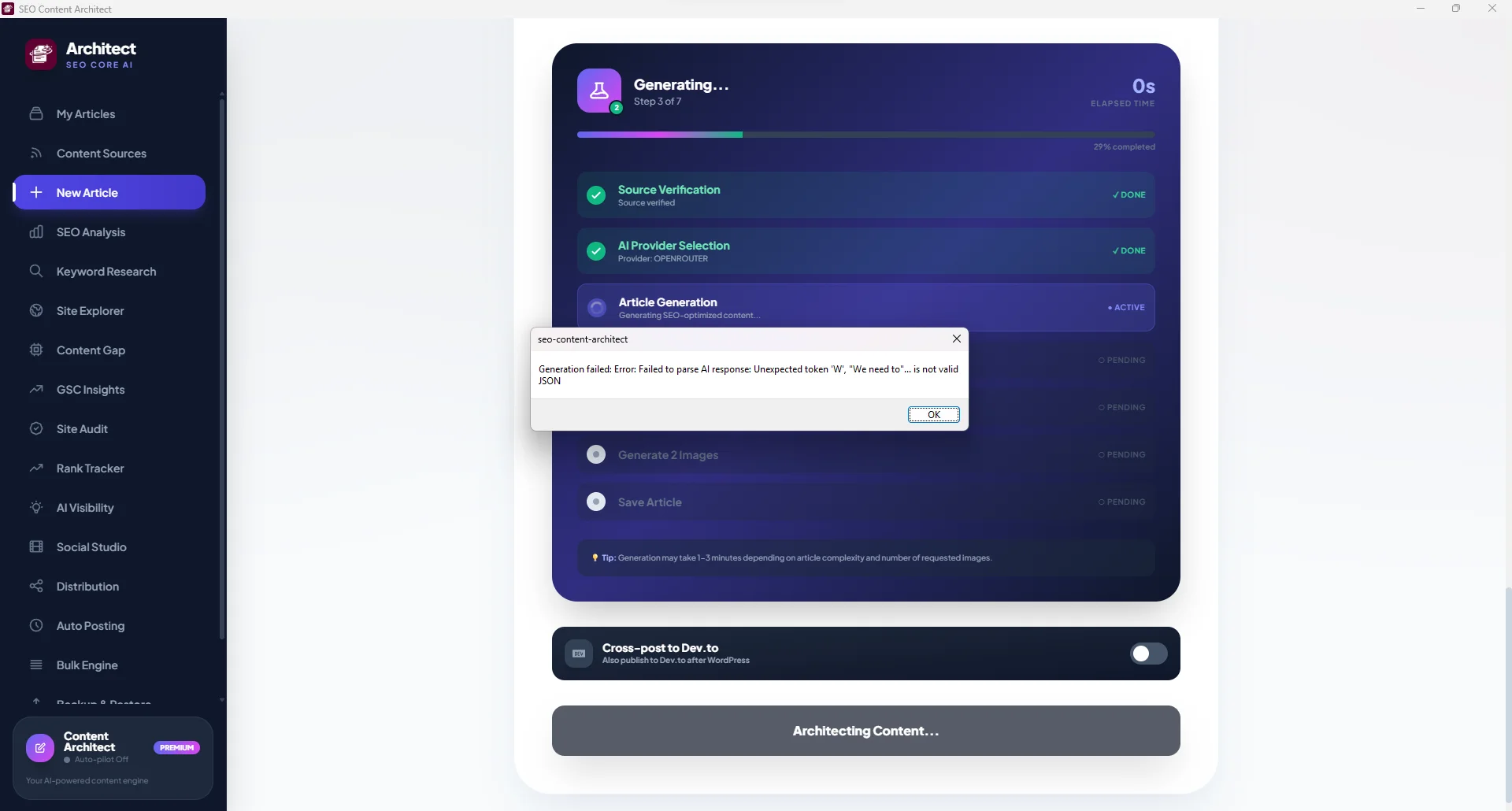
This model failed to produce any output during testing. It errored out entirely and never generated an article. In the current snapshot of the free tier, this model is unusable for the tested workflow and should not be relied upon for production content generation. The failure occurred during the initial API request, suggesting either a service disruption, rate limits being exceeded, or a fundamental issue with the model’s current availability.
This failure underscores a critical point about free-tier models: availability, reliability, and performance are constantly in flux. A model that works today may fail tomorrow, and vice versa. When evaluating models on OpenRouter, always verify current status and test with your specific use case before committing resources.
Key Findings: Usability Across the Free-Tier Spectrum
The benchmark revealed a clear segmentation of the four models tested:
Immediately usable (single-pass): nvidia/nemotron-3-ultra-550b-a55b:free and inclusionai/ling-3.0-flash:free (though the latter fails on refinement)
Usable with refinement (multi-step): nvidia/nemotron-nano-9b-v2:free
Not usable (broken): nvidia/nemotron-3-super-120b-a12b:free
This distribution means roughly half of the tested free models are production-ready, one becomes viable with additional workflow steps, and one is currently non-functional. These results should be treated as a snapshot of a specific moment in time, not as permanent rankings. The capabilities and rate limits of each model may change, so periodic retesting is essential.
Why Free-Tier Snapshots Matter
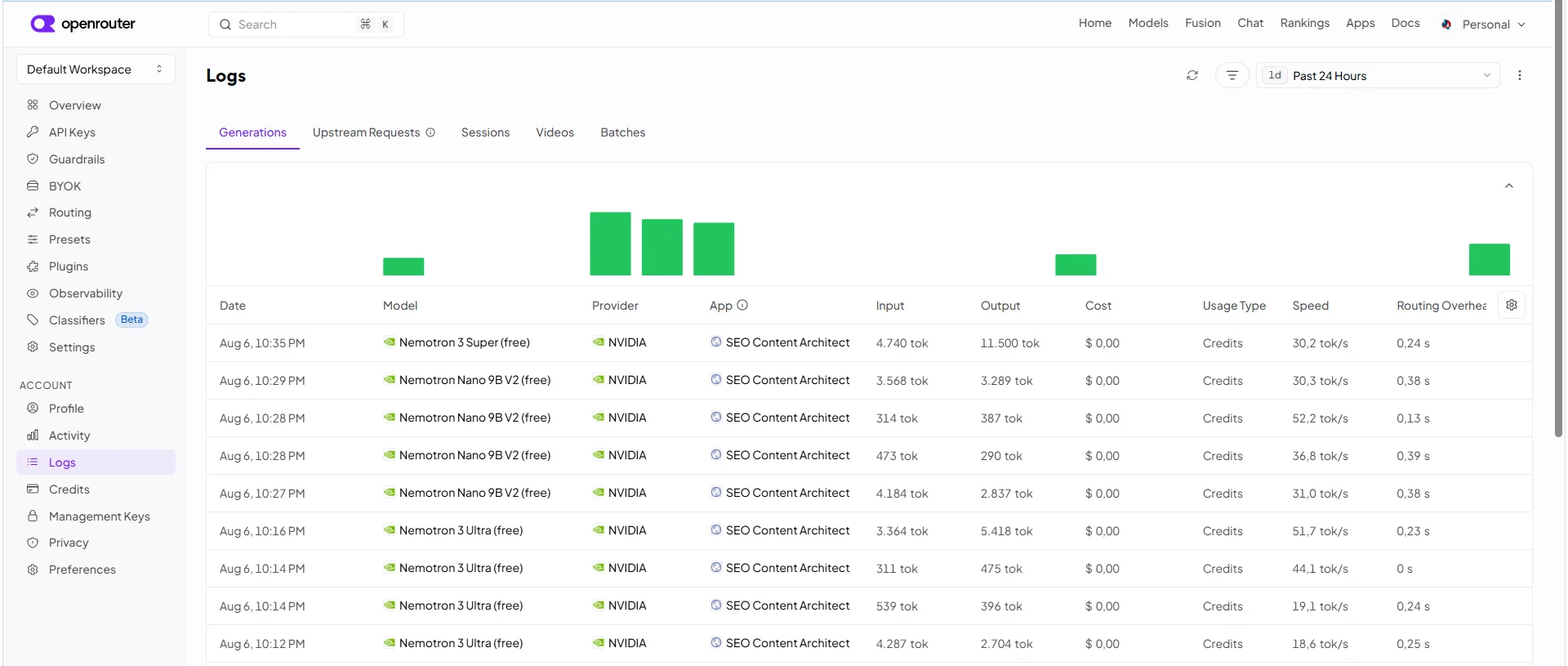
Free model availability on OpenRouter changes frequently. Models are added, removed, or updated based on provider partnerships and resource availability. Therefore, a benchmark conducted today may not reflect the same models or performance characteristics a month from now. The methodology and insights remain valuable, but the specific model recommendations require periodic retesting. Understanding the pricing model and rate limits for each free option helps you plan your content production strategy effectively.
Understanding API Integration and Request Handling
When working with free AI models through the OpenRouter API, understanding how requests are processed is crucial. The v1 chat completions endpoint handles messages role and content structures that determine how models interpret your instructions. Each model may have different rate limits on requests, and understanding these constraints helps you design workflows that won’t encounter failures.
JSON Response Formatting and Multimodal Capabilities
The best free models on OpenRouter support structured JSON responses, which is essential for programmatic content generation. When you send requests through the API, you can specify JSON output format to ensure consistent, parseable responses. Additionally, multimodal capabilities—including vision and image processing—vary by model. Some free models support image inputs and analysis, while others are text-only. Understanding these capabilities helps you choose the right model for your specific use case.
The v1 chat completions format allows you to structure messages role with user content in a way that maximizes model performance. When designing your requests, consider how the model’s reasoning capabilities interact with your prompt structure. Testing different message role configurations can significantly impact the quality of responses you receive.
The Hidden Half of Zero-Cost Content: Image Sourcing
An often-overlooked aspect of zero-cost content creation is image sourcing. In this workflow, images were pulled automatically from Pexels and integrated into the final article without additional cost or manual effort. This automation is crucial to understanding true end-to-end cost efficiency.

Many creators focus exclusively on the language model portion of content generation and overlook that professional blog articles require visual elements. By integrating Pexels image sourcing into the workflow, this benchmark kept the entire process genuinely free, from keyword input through final article with images. When you evaluate free AI models, remember that the total cost of content production includes more than just the API requests—it includes image sourcing, formatting, and distribution.
ℹ️ Note: Free image APIs like Pexels are essential to maintaining zero-cost workflows. Without automated image sourcing, you’d need to either pay for stock photos or spend manual time finding open-license alternatives, both of which add cost or friction.
Understanding Model Reliability and Failure Modes
The fact that one model errored out entirely while another failed only during refinement raises important questions about free-tier LLM reliability. Several factors contribute to these failures, and understanding them helps you design more resilient workflows.
Why Free Models Fail More Frequently
Free-tier models often run on shared infrastructure with lower resource allocation than paid tiers. Additionally, they may have less rigorous testing or monitoring. In some cases, a model may work for simple generation but fail under specific conditions, like the refinement pass that requires more complex prompt handling or longer context windows. Rate limits on free models are typically more restrictive, which can cause failures when you send multiple requests in rapid succession.
Therefore, testing each model with your exact workflow before committing to production use is non-negotiable. What works in a simple test may fail under real-world conditions. Understanding the rate limits and context constraints of each model helps you design workflows that stay within safe operating parameters.
Error Recovery and Fallback Strategies
For production workflows, consider implementing fallback logic: if the primary model fails, automatically route to a secondary model. This approach, combined with the data from this benchmark, allows you to build a resilient system even when using free tiers. When designing your API integration, include error handling that catches failures and implements retry logic with exponential backoff, respecting rate limits to avoid cascading failures.
Comparing DeepSeek and Google Models on OpenRouter
While this benchmark focused on NVIDIA and inclusionai models, it’s worth noting that DeepSeek models have gained prominence on OpenRouter as best free options. DeepSeek models are known for strong reasoning capabilities and multimodal support. Similarly, Google models available through OpenRouter offer different trade-offs in terms of capabilities, context windows, and rate limits.
When you compare AI models on OpenRouter, include DeepSeek and Google options in your evaluation. These models may offer different pricing structures, rate limits, and capabilities than the NVIDIA options tested here. The methodology outlined in this benchmark can be applied to evaluate DeepSeek, Google, and other models as they become available or as your requirements change.
People Also Ask
Are there free models on OpenRouter?
Yes, OpenRouter offers several free models that can generate complete blog articles and other content. This benchmark tested four free models, with two proving immediately production-ready and one viable with refinement. Free models on OpenRouter are genuinely usable for content production, though reliability varies. You can access free AI models through the OpenRouter API by selecting models marked as free in the models router collection.
Do OpenRouter free models have limits?
Yes, free models on OpenRouter typically have rate limits on requests, context window constraints, and potentially lower priority on shared infrastructure. Rate limits vary by model and may restrict how many requests you can send per minute or hour. Understanding these rate limits is essential for designing production workflows. Free models may also have limitations on certain capabilities like vision processing or multimodal inputs. Always check the specific rate limits and capabilities for each model before integrating it into your workflow.
How to make OpenRouter only use free models?
When using the OpenRouter API, you can specify which model to use in your v1 chat completions requests. To use only free models, select from OpenRouter’s free models collection and specify those model IDs in your API calls. You can also implement logic in your application to filter available models and only present free options to users. The OpenRouter models router allows you to browse and select from free models, and you can hardcode those model IDs into your application to ensure you’re only using free tiers.
What is the alternative to OpenRouter with free models?
Several alternatives offer free AI models for content generation, including Hugging Face’s inference API, Ollama for local model hosting, and direct access to provider APIs like Google’s Gemini free tier or Anthropic’s Claude offerings. However, OpenRouter’s advantage is that it aggregates multiple free models in one place, allowing you to compare AI models and switch between them easily. Each alternative has different rate limits, capabilities, and pricing structures, so evaluate based on your specific needs for context windows, multimodal support, and reasoning capabilities.
Which free OpenRouter model is best for blog writing?
Based on this benchmark, nvidia/nemotron-3-ultra-550b-a55b:free is the best overall choice for blog writing. It combines fast generation, solid text quality, and reliable completion of SEO refinement passes. If your workflow requires a single-pass generator, this model delivers the most consistent results without errors or failures. When you compare AI models on OpenRouter for content production, this NVIDIA option consistently outperforms alternatives in reliability and output quality.
Can free OpenRouter models generate full blog articles?
Yes, free OpenRouter models can generate full-length blog articles. In this test, all functioning models produced complete articles ranging from expected length to significantly longer than requested. However, quality varies by model, so testing with your specific use case is essential. The capabilities of each free model differ, so one model may excel at long-form content while another performs better on shorter pieces. Test your chosen model with representative keywords before committing to production use.
Do free models support an SEO improvement pass?
Not all free models support SEO refinement reliably. In this benchmark, two models completed the improvement pass successfully, one failed consistently, and one errored out entirely. If SEO optimization is critical to your workflow, test the specific model with your refinement prompts before committing to production use. Understanding the reasoning capabilities and context handling of each model helps predict whether it will succeed at multi-step optimization tasks.
Why do some free OpenRouter models fail or error out?
Free-tier models often run on shared infrastructure with lower resource allocation, less rigorous monitoring, and potentially less thorough testing than paid tiers. Failures can result from timeout issues, insufficient context handling, rate limits being exceeded, incompatibility with specific prompt structures, or model limitations. Free availability also changes frequently, so a working model may become unavailable without notice. When designing workflows, always implement error handling and fallback strategies to account for potential failures.
How reliable are free-tier models for content production?
Free-tier models are moderately reliable for content production if you test them thoroughly with your specific workflow and implement fallback strategies. Two of the four models tested were production-ready, one required additional refinement steps, and one failed entirely. Therefore, treat free models as viable but not guaranteed, and always have a backup plan for critical workflows. Understanding the rate limits and capabilities of each model helps you design systems that work reliably within their constraints.
Practical Recommendations for Your Content Workflow
Based on these results, here’s how to integrate free OpenRouter models into your content production system. When you compare AI models on OpenRouter, use these recommendations as a framework for evaluating which best free options fit your specific needs.
If You Want Single-Pass Generation
Start with nvidia/nemotron-3-ultra-550b-a55b:free. It’s fast, reliable, and produces solid output without requiring additional optimization. This model is your best bet if you need quick turnaround and can accept first-draft quality as final output. The model’s reasoning and capabilities make it suitable for most blog writing use cases, and it respects rate limits without requiring complex retry logic.
If Your Workflow Includes Refinement Steps
You have two options: use nvidia/nemotron-3-ultra-550b-a55b:free for both draft and refinement (the most reliable approach), or use nvidia/nemotron-nano-9b-v2:free if you’re willing to accept weaker initial output in exchange for strong improvement responses. The latter saves resources on the first pass but requires the refinement step to be viable. When planning multi-step workflows, account for rate limits on requests to avoid hitting service constraints.
If You Need SEO-Optimized Output
Prioritize models that complete the SEO improvement pass without errors. In this test, only two of four models did so reliably. Therefore, always test the refinement pass with your specific SEO prompts before committing a model to production. Consider the model’s reasoning capabilities and context handling when evaluating whether it will succeed at complex optimization tasks.
If Cost is Your Primary Constraint
All four models tested are free at the point of generation, so your cost savings are real regardless of which model you choose. However, the time cost of failures, reruns, and manual cleanup varies significantly. Invest time upfront in testing to avoid costly failures during production runs. Understanding the rate limits and capabilities of each free model helps you maximize efficiency without incurring unexpected costs.
If You Need Multimodal Capabilities
Not all free models on OpenRouter support multimodal inputs like images. When you compare AI models on OpenRouter, verify that your chosen model supports the vision and image processing capabilities you need. Some free models excel at text-only tasks but lack multimodal support, while others offer comprehensive vision capabilities. Test with your specific use case to ensure the model meets your requirements.
The Broader Context: Free-Tier Availability and Change
This benchmark represents a snapshot of OpenRouter’s free tier at a specific moment. Free models are added and removed regularly, and performance characteristics can shift with updates. Therefore, these results should inform your testing methodology rather than serve as permanent recommendations. Understanding the pricing model and rate limits helps you adapt when models change or new options become available.
To stay current, periodically retest your chosen models and monitor the OpenRouter free models collection for new options. What doesn’t work today may work tomorrow, and vice versa. DeepSeek and Google models may become available as best free alternatives, so keep evaluating new additions to the models router.
💡 Tip: Set a quarterly review schedule to retest your primary and secondary models. This ensures you’re aware of new free options and can catch performance regressions before they impact production workflows. Monitor rate limits and API response times to identify when models are becoming less reliable.
Testing Free Models for Non-English Content
One significant limitation of this benchmark is that it focused primarily on English content generation. The question of how well these free models perform for non-English keyword-to-article generation remains largely untested. Multilingual content production introduces additional complexity: language-specific prompt engineering, different content scoring metrics, and varying model capabilities across languages.
For teams working with non-English content, this benchmark provides a methodology you can replicate in your target language. The same four models may perform differently when generating Spanish, French, German, or other language content. Testing with your specific language and keyword set is therefore essential before committing resources. Consider how the model’s reasoning and context handling translate to non-English use cases.
ℹ️ Note: When testing free models for non-English content, be aware that rate limits and capabilities may vary by language. Some models may have better support for certain languages than others, so comprehensive testing is essential.
Advanced: API Integration and JSON Response Handling
For developers integrating free OpenRouter models into applications, understanding the v1 chat completions API is essential. The API accepts messages role structures where each message contains role and content fields. When you structure requests this way, you can control how the model interprets instructions and generates responses.
JSON response formatting is supported by most free models on OpenRouter, allowing you to request structured output. This is particularly useful for content generation workflows where you need consistent, parseable responses. When designing your API integration, specify JSON output format to ensure responses are machine-readable and can be processed by downstream systems.
Understanding rate limits on requests helps you design systems that don’t exceed service constraints. Most free models have per-minute or per-hour limits, so implement queuing and retry logic that respects these boundaries. When you send multiple requests in sequence, space them appropriately to avoid hitting rate limits.
🎯 What You Now Know About Free OpenRouter Models for Blog Writing
nvidia/nemotron-3-ultra-550b-a55b:free is the most reliable free model tested, successfully completing both draft and SEO refinement passes without errors. It represents the best free option for most content production use cases.
Free-tier models are genuinely usable for content production, but reliability varies significantly. Two of four tested models were immediately production-ready, one required refinement to be viable, and one failed entirely. When you compare AI models on OpenRouter, test thoroughly before committing to production.
Not all free models support SEO improvement passes; if refinement is part of your workflow, test each model’s compatibility with your specific optimization prompts and understand how its reasoning capabilities handle complex requests.
True zero-cost content creation requires automation beyond just the language model. Image sourcing from free APIs like Pexels is essential to keeping end-to-end costs at zero.
Free-tier availability changes frequently, so treat these results as a testing methodology and snapshot rather than permanent rankings. Periodic retesting is necessary to stay current with new models on OpenRouter and changes to existing models.
For non-English content, the performance of these models may differ significantly from English results. Replicate this benchmark in your target language before committing to production use.
Implement fallback strategies and error handling in production workflows, since free models are more prone to failures than paid alternatives. Understand rate limits on requests to design systems that operate reliably within service constraints.
DeepSeek and Google models represent additional best free options to evaluate. When you compare AI models on OpenRouter, include these alternatives in your testing to find the best fit for your specific capabilities and use cases.
Multimodal capabilities, vision support, and JSON response formatting vary by model. Test your chosen model with your specific requirements to ensure it meets your needs for content generation and processing.