
Open Source

Open-source and self-hosted software, and how to actually run it. This category covers projects you can clone, inspect and host yourself: SEO toolkits, AI automation libraries, developer utilities, and the communities that keep them alive.

The posts here go past the README. They cover what a project does, what you need in place before you start, the installation steps in order, and the practical trade-offs against the commercial alternative — cost, control over your own data, how far you can customise it, and the level of support you can realistically expect.

Self-hosting is not free. It trades a subscription for your own time and infrastructure. Someone has to apply the updates, watch the logs, and be there when it breaks on a Friday evening. For a small team that cost is real, and it does not appear on any pricing page.

The questions worth asking before adopting a project are usually the same ones: how recently was it committed to, how many people can merge changes, what happens to your data if the maintainer walks away, and how hard is it to get back out again. Where the answers are known, the write-ups say so, and where a project is a single-maintainer effort, that is stated plainly rather than glossed over.

These write-ups are meant to make that trade explicit, so you can tell which projects are worth the effort and which are better left to a paid tool.

Clip Architect: MoneyPrinterTurbo as a Windows Desktop App

Clip Architect: MoneyPrinterTurbo as a Windows Desktop App

What Clip Architect Actually Changes About Local AI Video Generation Here’s what people get wrong about a tool like this. The hard part was never really the AI writing the script. It’s the plumbing around it, the part nobody photographs for the landing page. Clip Architect is a Windows desktop application that wraps the open-source

Clip Architect: MoneyPrinterTurbo as a Windows Desktop App Read More »

Plane: Open-Source Jira and Linear Alternative

Plane: Open-Source Jira and Linear Alternative

Technical Analysis: Architecture, Open-Core Model, Tech Stack, and Enterprise Evaluation Guide 1. Why a Self-Hosted Project Management Platform Matters In modern software engineering, backlogs, product roadmaps, and internal documentation represent critical intellectual property. Storing this data exclusively on foreign SaaS servers under per-seat subscription models creates significant cost and compliance risks. Plane was created as

Plane: Open-Source Jira and Linear Alternative Read More »

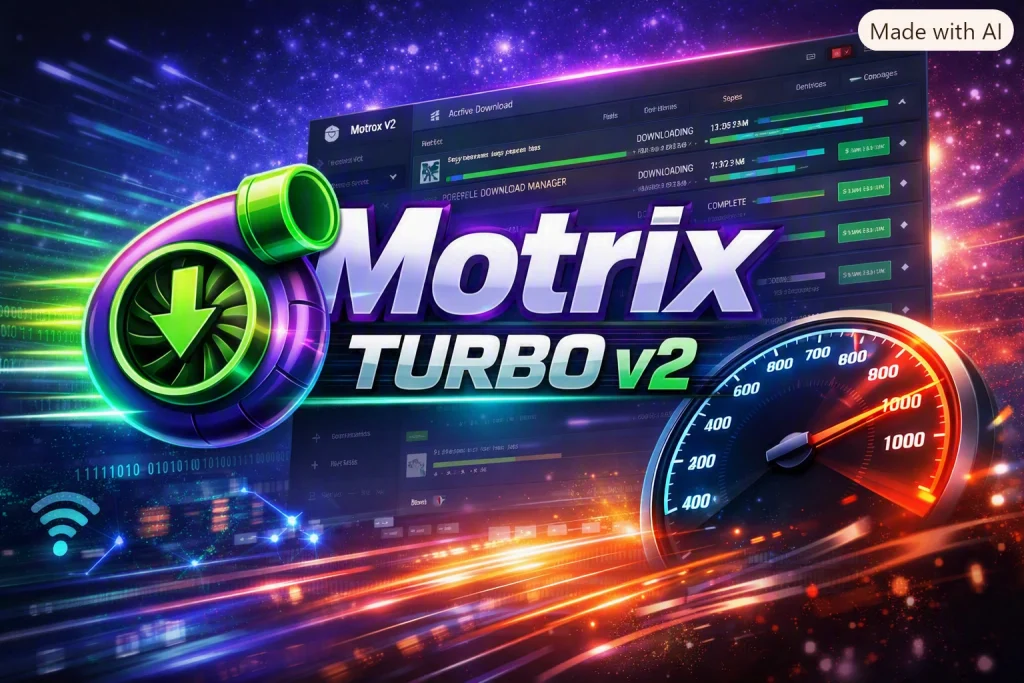
Motrix Turbo v2: what the rewrite actually changes, and what you can install today

Motrix, long known as a clean GUI wrapper around aria2, is being rebuilt from the ground up. The new line is called Motrix Turbo v2, and it splits the download core away from the interface, then exposes that core through MDXP, an open protocol built on JSON-RPC 2.0. The same core drives the desktop application

Motrix Turbo v2: what the rewrite actually changes, and what you can install today Read More »

Muse Glimmer 30B: Meta's Local Agentic Model

Muse Glimmer 30B: What Meta’s Local Agentic Model Actually Requires

Meta released Muse Glimmer on 10 August 2026: a dense, multimodal, Apache 2.0 model distilled from Muse Spark and aimed at agents that run on your own hardware. The pitch is genuinely interesting, and — unlike most “runs locally” claims — the deployment story mostly holds up when you check the numbers. Where it needs

Muse Glimmer 30B: What Meta’s Local Agentic Model Actually Requires Read More »

DeepTutor: Open-Source Agent-Native AI Tutor

DeepTutor: Open-Source Agent-Native AI Tutor

DeepTutor is an open-source, agent-native personalized tutoring and learning workspace built by HKUDS, and it has collected a lot of attention fast: the GitHub API reports 34,646 stars and 4,416 forks on HKUDS/DeepTutor, a Python project under Apache-2.0 created on 2025-12-28. Stars measure interest, not quality, so treat that number as a signal that people

DeepTutor: Open-Source Agent-Native AI Tutor Read More »